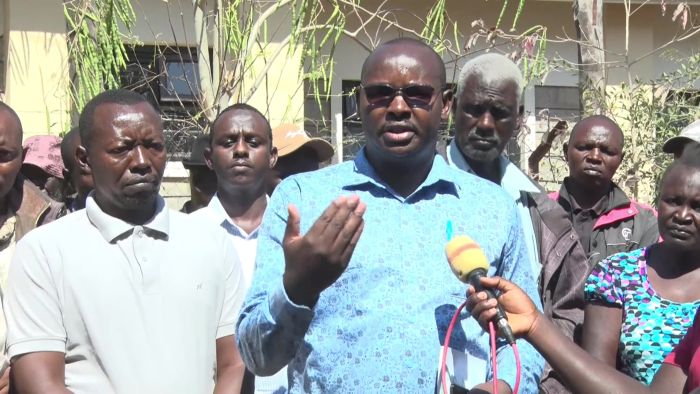
Community elders from the Ndorobo and Turkana communities have stepped in to defuse mounting tensions in Burat Ward, Isiolo County, following four days of conflict linked to livestock theft.
The elders’ priority is to recover the livestock and prevent further conflicts and provide an opportunity to stop theft and retaliation through peaceful dialoguing and reconciliation.
They met today in an effort to resolve the disputes in a peace initiative convened by the Regional Pastoralists’ Peace-Link (RPPL) in collaboration with county security actors through the office of the County Commissioner.
The meeting underscored the importance of traditional leadership in resolving conflicts among pastoralist communities, where elders continue to command influence and trust.
Burat Ward Member of County Assembly Nicholas Lorot said the four days of clashes had resulted in death of a conservancy ranger caught in the crossfire and losses for both communities, with over 1,400 goats and sheep stolen.
In restoring calm, elders from the two communities agreed to lead efforts to trace and return livestock allegedly stolen from either side within three days.
The bargain is expected to provide a pathway towards slowing the conflicts and rebuilding confidence between the communities.
“The solution to this problem cannot be revenge,” the Turkana Council of Elders Chairman Stephen Edung said, emphasizing dialogue and established community peace mechanisms as the best way of resolving the disputes.
Ndorobo Community elder Lela Kinyaga said the initiative involving traditional leaders provided an important platform for dialogue, reconciliation and peaceful settlement of the dispute.
They said the violence had already inflicted serious hardship on affected families and warned that retaliatory attacks would only deepen the losses and damage relations between the two communities.
Isiolo Assistant County Commissioner James Macharia warned against attempts to disrupt transport operations along Isiolo town – Kipsing road, saying security agencies would maintain regular patrols along the affected areas.
He warned that individuals found interfering with transport operations would face firm action.
Macharia added that road transport disruption impacted negatively on security on movement, trade and livelihoods in the pastoralist region.
He called on residents from both communities to work together to prevent livestock theft, reject revenge attacks and protect relations between pastoralist groups that depend on shared resources.
RPPL Programmes Coordinator Halima Ali said the tensions raised concern as the country approaches the election campaign period, warning that unresolved ethnic grievances could easily be exploited.
She called on peacebuilding organizations, community leaders and security agencies to work together to restore peaceful coexistence between the neighbouring communities.
Ali also stressed the need for early warning and early response mechanisms, saying communities and security actors must work together to identify and address emerging tensions before they develop into full-blown conflict.
She said community elders remain critical actors in conflict prevention and peacebuilding, particularly in pastoralist areas where traditional dispute-resolution systems continue to complement formal security and administrative structures.
“The involvement of elders is important because they have the trust and influence needed to reach communities at the grassroots,” she said.
The communities share grazing fields, water sources and other livelihood resources, making peaceful coexistence essential to their survival.
By David Nduro