For thousands of Kenyans who missed out on formal schooling, adult education is providing a pathway back to learning, opening opportunities for further education, better livelihoods and greater participation in society.
This was highlighted in Murang’a County as stakeholders marked International Literacy Day, with adult learners encouraged to embrace lifelong learning as a means of overcoming social and economic barriers.
The celebrations, held at the department’s county offices in Murang’a, brought together adult learners, education officials and other stakeholders under the theme “Literacy for People, Planet and Prosperity.”
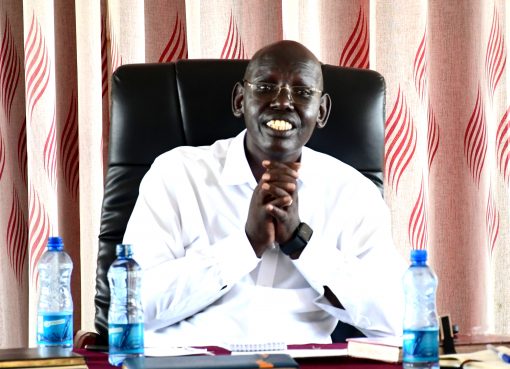
County Director for Adult and Continuing Education Boniface Sitima said adult education had become an important avenue for residents who either missed formal education or dropped out of school to pursue their educational ambitions.
He said Murang’a currently has 93 adult learning centres serving 2,231 learners, comprising 1,503 undertaking basic literacy, 526 in post-literacy programmes and 202 pursuing secondary education through adult community secondary schools.
Sitima said the growing number of adults pursuing secondary education demonstrated that many residents were determined to overcome barriers that had interrupted their education earlier in life.
He noted that 100 adult learners from Murang’a are expected to sit the KCSE examination this year, with classes structured to accommodate learners who have family, employment and other responsibilities.
“The programmes provide a second chance to people who missed formal education and want to improve their literacy, academic qualifications and skills,” said Sitima.
The impact of adult education was demonstrated by the experience of learner Muchoki Maina, who overcame financial challenges and repeated examination attempts to secure a place at Murang’a University of Technology.
Maina sat his KCPE examination in 2000 but was unable to proceed to secondary school because his family could not afford school fees. He later returned to education through an adult learning programme and sat the KCSE examination five times.
In 2023, he scored 47 points, enabling him to join Murang’a University of Technology.
Maina said his journey had required patience and determination, adding that adult education had given him an opportunity to pursue ambitions he had once considered unattainable.
He said he hopes to become a doctor and university lecturer, while encouraging fellow adult learners to remain focused despite the challenges they may encounter.
The government has continued to promote adult education as part of efforts to address illiteracy and equip citizens with skills needed to participate effectively in the economy.
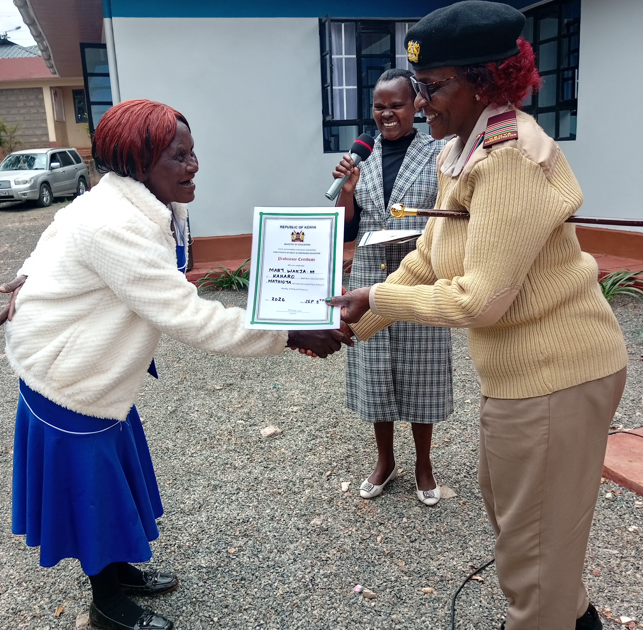
Delivering a speech on behalf of Principal Secretary for the State Department for Social Protection and Senior Citizen Affairs Joseph Motari, Deputy County Commissioner Dorcas Mwangi said the government had established 5,220 adult education centres nationally, with more than 165,000 learners enrolled.
She said 15,241 learners had successfully completed proficiency assessments and qualified for proficiency certificates this year.
The government is also reviewing the adult education curriculum, developing local-language learning materials, expanding accelerated education programmes for out-of-school youth and establishing additional community learning centres.
Other areas being promoted through adult learning include digital and financial literacy, entrepreneurship and livelihood skills, particularly in underserved communities.
However, Mwangi noted that 17.2 per cent of adults in Kenya still cannot read and write, calling for intensified efforts to identify and enroll those who remain outside literacy programmes.
She urged chiefs, local leaders, education officials and community organizations to work closely with adult education instructors to identify residents who could benefit from the programmes.
The International Literacy Day celebrations served as a reminder that education does not have to end in childhood.
For adults who missed the opportunity earlier in life, literacy and lifelong learning can provide the skills, confidence and qualifications needed to pursue new opportunities and contribute more effectively to their families and communities.
By Bernard Munyao and Ann Kendi